
3-Phase vs Single-Phase Catering Equipment Explained
Confused by electrical phases? Read our guide on 3-phase vs single-phase catering equipment for UK commercial kitchens before you buy used.
Understanding 3-Phase vs Single-Phase Catering Equipment
Opening a commercial kitchen or upgrading your layout means making tough decisions about your power supply. One of the most fundamental technical choices you will face involves understanding 3-phase vs single-phase catering equipment before buying any new or used machinery. Getting this wrong can lead to costly installation delays, tripped fuses, or purchasing heavy-duty gear you cannot actually power in your building. This guide will walk you through the practical differences, help you assess your current setup, and explain how to make the right choice when buying used equipment on CaterBids.
The Operational Differences: 3-Phase vs Single-Phase Catering Equipment Explained
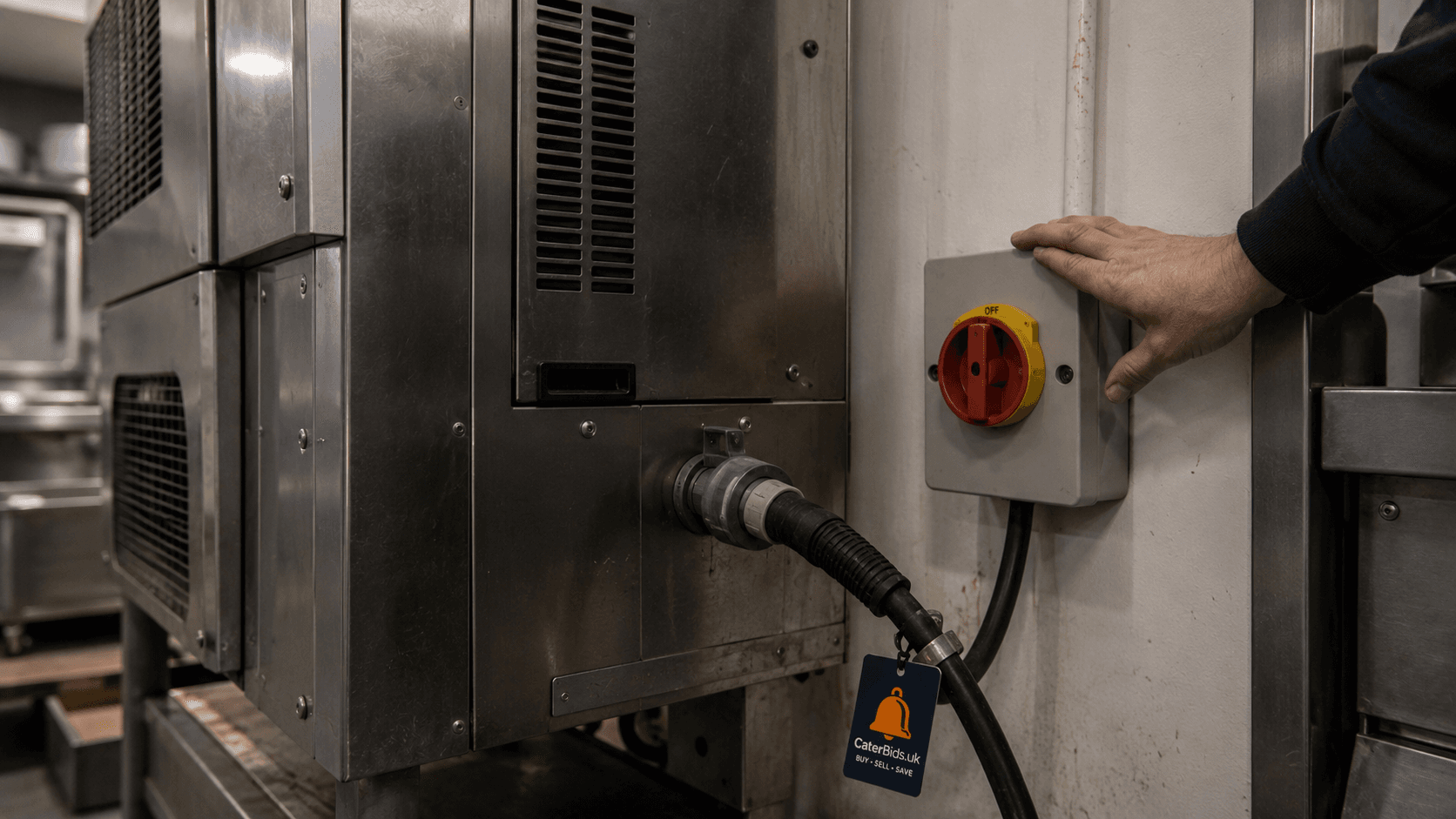
Think of electrical phases as the pipes delivering power to your commercial appliances. Single-phase power is what you find in standard UK domestic homes and small retail premises. It operates on a nominal 230V supply. Most low-to-medium output appliances use a standard three-pin 13-amp plug, while larger single-phase items require hardwiring by a qualified electrician to a dedicated 32-amp wall switch.
In contrast, three-phase power operates at a nominal 415V and uses three active alternating current lines instead of one. This setup delivers a continuous, heavy-duty flow of power without the micro-pauses inherent in single-phase electricity. Large kitchens, bakeries, and restaurants rely on three-phase power to run heavy thermal loads and high-torque motors without dropping voltage or overloading the distribution board. When comparing three-phase vs single-phase catering equipment, the primary difference is the capacity and speed of heat transfer. Three-phase systems handle high power demands effortlessly, making them the industry standard for high-volume commercial venues.
The Operational Differences in a Fast-Paced Commercial Kitchen
Why does this electrical distinction matter during a busy dinner service? It directly impacts recovery times and heating capacity. Take a pass-through dishwasher as an example. A machine running on single-phase takes longer to reheat the rinse tank between wash cycles. If your kitchen porter is feeding plates through constantly, this may force you to pause washing while the water climbs back up to the required sanitation temperature. A three-phase version of the same machine heats the wash and rinse water almost instantly, keeping your wash station moving.
Similarly, with combi ovens, a three-phase Rational iCombi Pro 10-grid (which you can often find used for around £6,500 to £9,500 depending on age and service history) provides rapid steam generation and fast heat recovery when the doors are constantly opened and closed. A single-phase counter-top combi oven works well for light prep or café menus but cannot match the speed or consistent temperature recovery of a three-phase unit. If you plan to buy high-performance cook-line items, check the electrical specifications carefully before browsing our marketplace.
Real-World Examples and Used Market Price Guides
To help you budget, here are the power configurations and approximate used price ranges for some common UK catering brands:
- Combi Ovens: Brands like Rational, Unox, and Convotherm dominate the three-phase market. A used Rational 6-grid combi oven typically costs between £4,000 and £7,000 depending on condition. These units require a three-phase supply, pulling upwards of 11kW. By comparison, a small single-phase convection oven like a Lincat CO228 can run on a standard 13-amp plug and costs roughly £800 to £1,500 used, though it has a fraction of the capacity.
- Dishwashers: A standard undercounter glasswasher from Maidaid or Classeq usually runs on a 13-amp or 25-amp single-phase supply and costs around £700 to £1,400 used. However, high-volume pass-through dishwashers like the Hobart AMX series (averaging £2,200 to £4,000 in the used market) usually require a three-phase supply to ensure back-to-back washing without temperature drops.
- Fryers: Commercial electric fryers pull a massive amount of power. A double-well electric fryer from Blue Seal or Falcon often requires a three-phase connection to maintain frying temperatures when frozen products are introduced. If you only have single-phase power, you might need to look at gas options (which must be installed by a Gas Safe registered engineer) to achieve the necessary recovery speeds.
Checklist: How to Assess Your Property's Electrical Supply
Before bidding on or buying any heavy electrical kit, follow this checklist to ensure your building can handle the load:
- Check your fuse board: A three-phase distribution board is physically larger than a single-phase board. It usually features a main switch that is triple the width of a standard switch, combining three separate switches into one linked mechanism.
- Check your electricity bill: Your commercial tariff or utility bill will often explicitly state whether you are on a three-phase profile, showing different standing charges or rate structures compared to standard single-phase premises.
- Audit your total amp load: Every appliance has a rating plate detailing its power draw. Add up the total kilowatts of your existing kit. A qualified electrician can calculate your total maximum demand to ensure your main incoming fuse (often 60A, 80A, or 100A) will not blow when all equipment is running at once.
- Look for red industrial sockets: If your kitchen cook-line has large wall-mounted red sockets (usually 4-pin or 5-pin, rated at 16A, 32A, or 63A), you already have a three-phase supply routed into the kitchen area. Standard blue sockets are single-phase 230V.
Upgrading and Logistics: What Operators Need to Know
If you are setting up in a high-street unit that previously housed a retail shop, your supply will almost certainly be single-phase. Upgrading a commercial property to three-phase is a major undertaking. It requires application to your local Distribution Network Operator (DNO) and can cost anywhere from £3,000 to over £15,000 depending on the distance to the nearest substation. For many small start-ups, this cost is prohibitive. In these cases, it is wiser to design your menu around high-performance single-phase equipment or integrate gas appliances installed by a Gas Safe registered engineer.
For established businesses with three-phase power, purchasing three-phase used equipment is a highly sensible path. Three-phase components are often more robust and suffer less wear and tear over years of heavy service. When you are ready to upgrade your kitchen setup, CaterBids makes the transaction process simple. If you have outgrown your single-phase gear and want to make space for a high-powered three-phase combi oven, you can easily post a listing to sell your old equipment directly to other UK operators. When transporting heavy units, especially three-phase ovens or pass-through dishwashers, safety is paramount. Check out our pallet delivery guide to understand the logistics of moving commercial-grade kit safely.
Conclusion and Next Steps
Understanding your power requirements keeps your kitchen safe, prevents electrical issues, and protects you from purchasing unusable machinery. For more detailed guides on kitchen layout, ventilation requirements, and commercial kitchen maintenance, browse our catering equipment blog.
Ready to trade? Whether you need to source a reliable single-phase undercounter dishwasher or sell a heavy-duty three-phase oven, CaterBids connects commercial buyers and sellers across the UK.
BUY • SELL • SAVE
Visit the CaterBids marketplace today to find the perfect machinery for your kitchen’s power profile.
Ready to Sell Your Equipment?
Your first listing is free while our launch offer lasts, then from £5 for 30 days. No commission and no final value fee, so what a seller makes is what they keep.
Prepare Your Equipment
- Clean stainless surfaces
- Disconnect safely
- Photograph the data plate
- Box loose parts
- Measure and weigh
- Prepare for pallet collection