

Buying Used Commercial Refrigeration: What to Actually Check
A commercial kitchen veteran's checklist for buying used commercial refrigeration. Coils, compressors, F-Gas and power draw before you spend a penny.
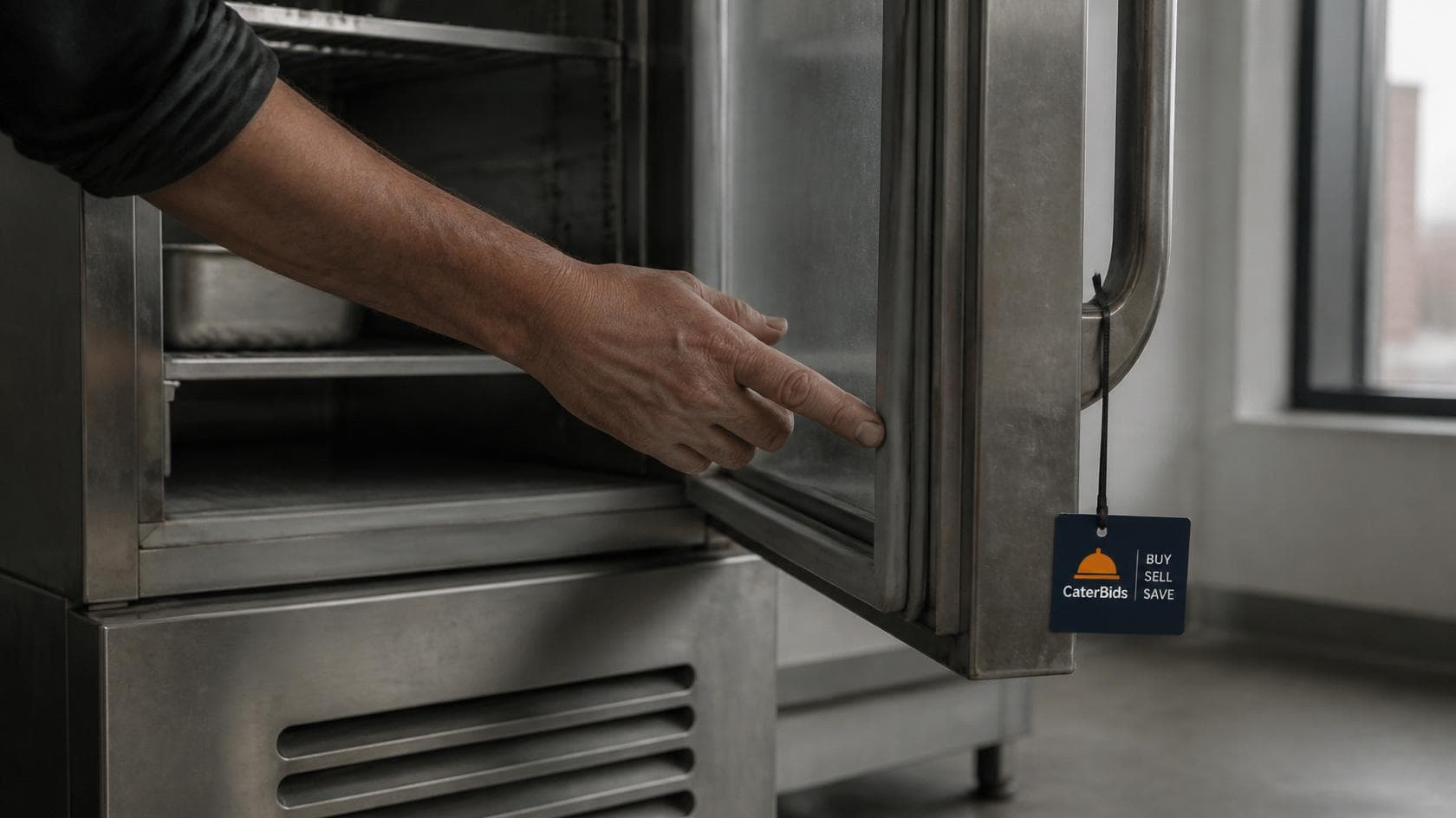
Buyers regularly get stung on used refrigeration that looked perfectly fine from the outside and cost a fortune within six months. Here is what to check before money changes hands.
Know What You Are Buying
Used refrigeration covers far more than a stand up fridge, and the type matters as much as the condition.
- Display fridges and cabinets: front of house glass units. Strong secondhand, but the glass, lighting and door seals age fast, so inspect them closely.
- Blast chillers: bring cooked food through the danger zone fast and keep the EHO happy. Expensive new, real value used, but only buy one that comes with proof it still hits temperature within the required time.
- Plate freezers and cold storage: for volume operations. These are heavy, often three phase, and a proper job to move, so factor the logistics into the price you are willing to pay.
- Industrial and pack refrigeration: remote condensing packs feeding cold rooms. Serious kit for serious sites. Only buy with service history and a clear idea of the refrigerant inside.
Start with the condenser coil
The condenser coil sits at the back of the unit or underneath it. Pull it forward and look. In a busy kitchen it picks up grease and dust fast, and a filthy coil means the unit is working harder to reject heat than it should be. That shortens compressor life and drives up running costs. Surface dust you can clear off. Grease that has been baked on for two or three years tells you exactly how the previous operator looked after their kit.
Door seals and hinges
Run your fingers around the door seal all the way round. Tears or sections that have gone hard and brittle are normal wear, but a unit that has been running with a torn seal has been working its compressor unnecessarily hard for months, maybe years. Replacement seals are cheap enough. What the state of the seal tells you is whether anyone was paying attention.
Check the hinges too. A door that drops, does not self-close, or sits out of alignment has been taking punishment. Replacement hinges are available for most Foster, Williams and Hoshizaki units, but they add to your first-week costs.
Listen to the compressor
Turn the unit on and let it run. A healthy compressor hums steadily. A tired one knocks, rattles, or shudders at startup before settling. If it is struggling to start, that is expensive news. Give a unit that has been out of service a full hour before you judge the sound, but if it is making noises it should not, walk.
Where did it come from
A fridge from a cold prep room or pastry section has had a far easier life than one that sat next to a fryer in a hot kitchen. Heat and airborne grease accelerate compressor wear significantly. Ask where it ran. If the seller does not know, that itself tells you something.
Read the data plate. Photograph it.
Model number, serial number, power draw in kilowatts, refrigerant type. Get all of it before any money moves. The serial number usually encodes the manufacture year once you look it up with the manufacturer directly.
Refrigerant and F-Gas
This matters more than most buyers realise. Older units may run on R22 or R404A. R22 is fully banned in the UK, including recycled gas for servicing, so an R22 unit cannot legally be topped up if it loses its charge. R404A is being phased down under UK F-Gas regulations, which narrows the pool of engineers willing to work on it and pushes servicing costs higher over time. R290 (propane) and R600a (isobutane) are the current direction of travel for smaller units. You do not need to rule out older refrigerants outright, but you do need to factor future servicing cost into the price you are willing to pay.
Single phase or three phase
Most upright refrigeration runs on single phase, 13A plug. Larger units and anything with a remote condensing arrangement may need three phase. Check the data plate before you arrange collection. If it shows 230V, a standard socket does the job. If it shows 400V or three-phase symbols, you need a dedicated supply and that is a conversation to have before the lorry shows up.
Gastronorm sizing
Check the internal dimensions against the pans you already run. A GN 1/1 well is not the same as a GN 2/1 well and they are not interchangeable. This sounds obvious. People still get it wrong. Measure the doorway and the route in as well as the space the unit will stand in. A fridge that fits the kitchen but not the corridor to get there is not a bargain.
Prep counters and saladettes
On these, the well itself tells you a lot. Dents and deformation inside mean poor contact with the pans, which means the unit is not holding temperature consistently even when the dial says otherwise. Lift the lid and look at the gasket on the underside. A saladette running with a compromised lid seal is fighting a losing battle regardless of the compressor.
What Used Commercial Refrigeration Is Worth
Age drives the price more than anything else. As a rough guide against the new price: under 2 years old, 50 to 65 per cent. Two to 5 years, 30 to 45 per cent. Five to 8 years, 15 to 30 per cent. Over 8 years, 10 to 15 per cent and priced on condition alone. A Foster or Williams holds value better than a budget badge, and full service history moves you to the top of every band.
Selling Your Refrigeration
Idle refrigeration is cash sat in the corner. If you have upgraded or closed a section, sell it while it still runs.
- Sell it working. A fridge you can plug in and prove holds temperature sells faster and for more money than one sat dead in a yard.
- Clean it and photograph the plate. A deep clean and a clear data plate photo do half the selling for you. Photograph the plate and CaterBot pulls the specs, dimensions and the weight and size a courier needs to quote, so you are not sat typing out a listing.
- Price it honestly. Real condition, real photos, real price. That is how you list an item that actually sells instead of gathering messages.
Moving It Without Killing the Compressor
Refrigeration does not travel like a table.
- Keep it upright. The oil must stay in the compressor. Lay a fridge down and you risk killing it before it is even plugged in.
- Let it settle. Once stood in place, leave it 4 to 24 hours before powering on so the oil drains back.
- Palletise it properly. Heavy duty wrap, strapped to a pallet, tail lift for anything big.
When to buy, and when to walk
Used refrigeration from Foster, Williams or Hoshizaki with a quiet compressor, a clean coil, and a current refrigerant is often an excellent buy. The trade knows these brands last, which is why they hold their resale value. A no-name unit with a filthy coil, a compressor that shudders to life, and a refrigerant being phased out is a short-term saving and a long-term cost. Be honest about which one you are actually looking at.
If you are selling commercial refrigeration, list it at CaterBids. Photograph the data plate and CaterBot will pull the specs, dimensions and the weight and size a courier needs to quote, so buyers have what they need without back-and-forth. The site is in beta. You can browse the marketplace at caterbids.uk/marketplace, and whether you are buying or moving kit on: BUY • SELL • SAVE.
Ready to Sell Your Equipment?
Your first listing is free while our launch offer lasts, then from £5 for 30 days. No commission and no final value fee, so what a seller makes is what they keep.
Prepare Your Equipment
- Clean stainless surfaces
- Disconnect safely
- Photograph the data plate
- Box loose parts
- Measure and weigh
- Prepare for pallet collection