
Buying and Selling Used Commercial Food Preparation Equipment: A UK Guide
How to check a used commercial food processor or prep counter before you buy one, what actually helps it sell, and what it costs to list on CaterBids.
Why the Prep Section Gets Ignored, and Shouldn't
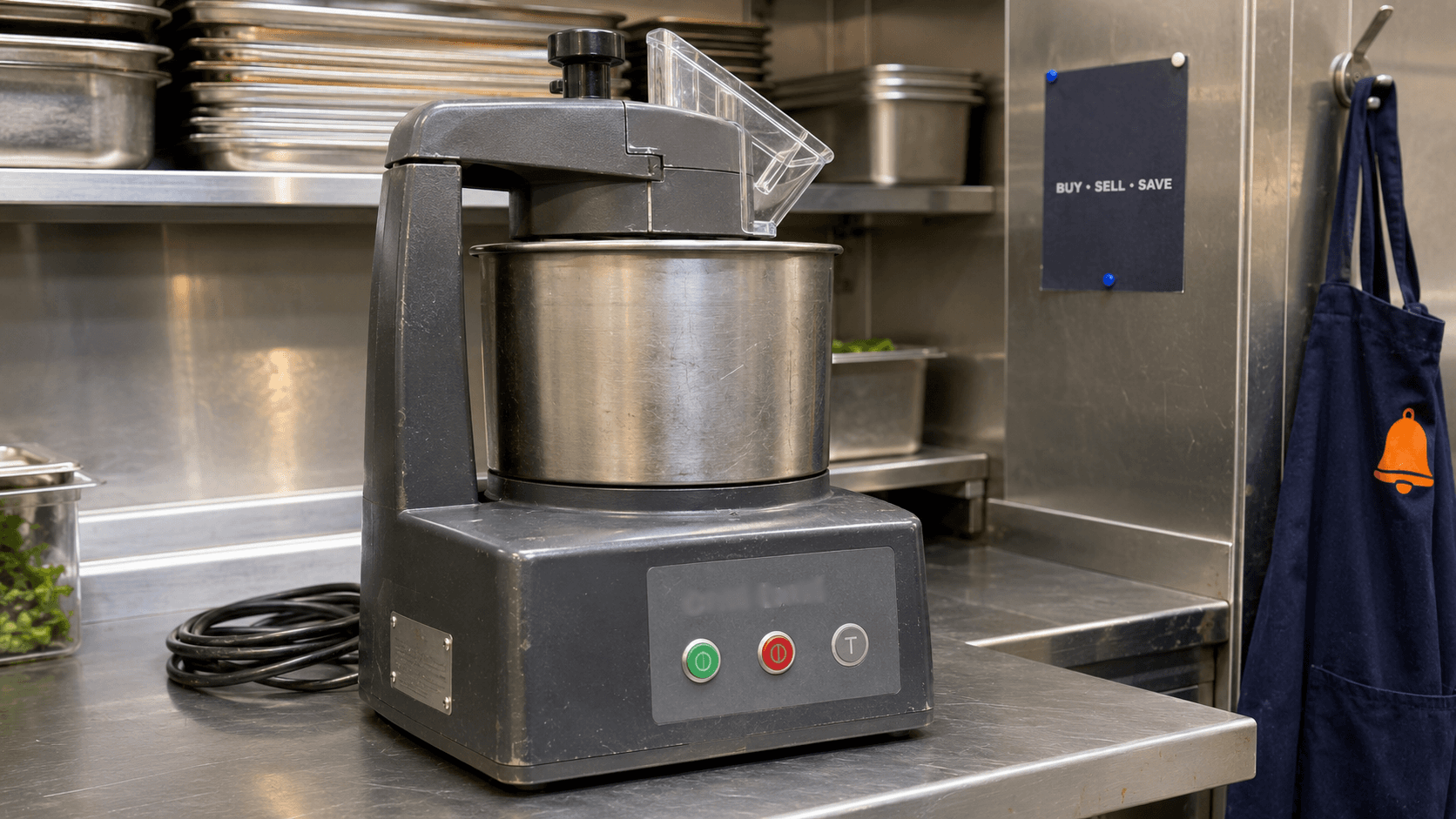
Ovens and fridges get the attention when a kitchen changes hands or closes down. Food preparation equipment, food processors, prep counters, dough dividers, cutter-mixers, is often the kit that gets sold cheapest and bought worst. It looks simple: a bowl, a blade, a motor. That simplicity is exactly why buyers skip the checks that matter, and pay for it later on a Friday lunch service when the machine won't switch on.
Prep equipment sits at the start of every kitchen's workflow. If it goes down, nothing downstream moves, whether you're running a restaurant kitchen or a single-unit trailer.
Buyer Advice: What Actually Tells You the Truth
- Check the interlock switch first: Every commercial food processor and cutter-mixer has a safety interlock under the lid that stops the blade the moment the lid isn't seated properly. It's the part that takes the most abuse in a working kitchen. If it looks taped over, bypassed, or freshly replaced with no explanation, the machine has been run hard, or run unsafely. Either way, ask why.
- Match the data plate to your supply, not the other way round: The plate states kW draw and phase. A 3kw single-phase unit and a 3kw three-phase unit are not interchangeable, and finding that out after delivery means an electrician's callout before the machine has cut a single onion. Confirm it before a deposit changes hands, not after.
- Listen to it, don't just look at it: A food processor motor running under no load should be close to silent. Humming, grinding or vibration through the base is wear you can't always see in a photo. Ask for a short video of it switched on if you can't view it in person.
- Read the bowl, not just the blade: Scratch scoring across the inside of a stainless bowl builds up over years and tells you more honestly how hard a machine has worked than a seller's estimate of its age.
- A cracked lid is a stop, not a discount: A stress-cracked polycarbonate lid is a safety fail in a commercial kitchen, not a cosmetic mark. Don't plan to manage around it.
Seller Advice: What Actually Sells This Kit
- Photograph the switch and the plate, not just the machine: Buyers who know food prep equipment look for the interlock and the data plate before anything else. Photograph both clearly, or the listing gets skipped by exactly the buyers who'd pay properly for well-kept kit.
- State the phase and the kW rating up front: A buyer who has to ask is a buyer who might not bother. CaterBot reads the data plate and fills in the specs for you: photograph the plate and it does the typing. It's still in beta, so check what it puts down before the listing goes live.
- Be straight about wear: A scratched bowl or a slightly worn switch isn't a reason to hide the machine, it's a reason to price it honestly. Buyers who deal in this kit expect wear. They don't expect to be surprised by it after collection. Sellers who list it on CaterBids with clear photos of both tend to find it moves faster than a listing built around one flattering angle.
Getting It There: Delivery on Prep Equipment
Most prep machines are lighter and more compact than an oven or a fridge, which makes them easier to move but no less easy to damage. A cutter-mixer's bowl and lid should travel separately from the base where possible, wrapped and boxed rather than left loose on a pallet. If it's going out on a pallet with other kit, keep it above anything that could catch the lid, and confirm the buyer has flat, dry, accessible space to receive it before a tail-lift driver turns up to a goods-in door that isn't ready.
Practical Checklist
- Check the lid interlock switch for signs of wear, taping or bypass
- Confirm the kW rating and phase against your kitchen's actual supply
- Ask for a short video of the machine running under no load
- Inspect the bowl for scratch patterns consistent with the stated age
- Check the lid for stress cracks before agreeing a price
- Photograph the data plate and the interlock switch before listing
- Confirm collection or delivery access before the day it's due to move
Buy it right and a food processor or prep counter earns its keep for years. Buy it blind and it's an expensive way to find out what the interlock switch was for. That's the argument behind CaterBids: buy, sell, save, on kit that's been checked properly rather than guessed at.
Ready to Buy or Sell Your Prep Equipment?
Browse the marketplace for food preparation equipment currently listed, or if you've got a machine sitting idle, list it on CaterBids and keep 100% of what it sells for.
Ready to Sell Your Equipment?
Your first listing is free while our launch offer lasts, then from £5 for 30 days. No commission and no final value fee, so what a seller makes is what they keep.
Prepare Your Equipment
- Clean stainless surfaces
- Disconnect safely
- Photograph the data plate
- Box loose parts
- Measure and weigh
- Prepare for pallet collection