

Selling a Catering Business: The Business, or Just the Kit?
Selling a catering business means a lease, trading history and goodwill transfer too. If none of that moves, you're selling kit. Here's the difference.
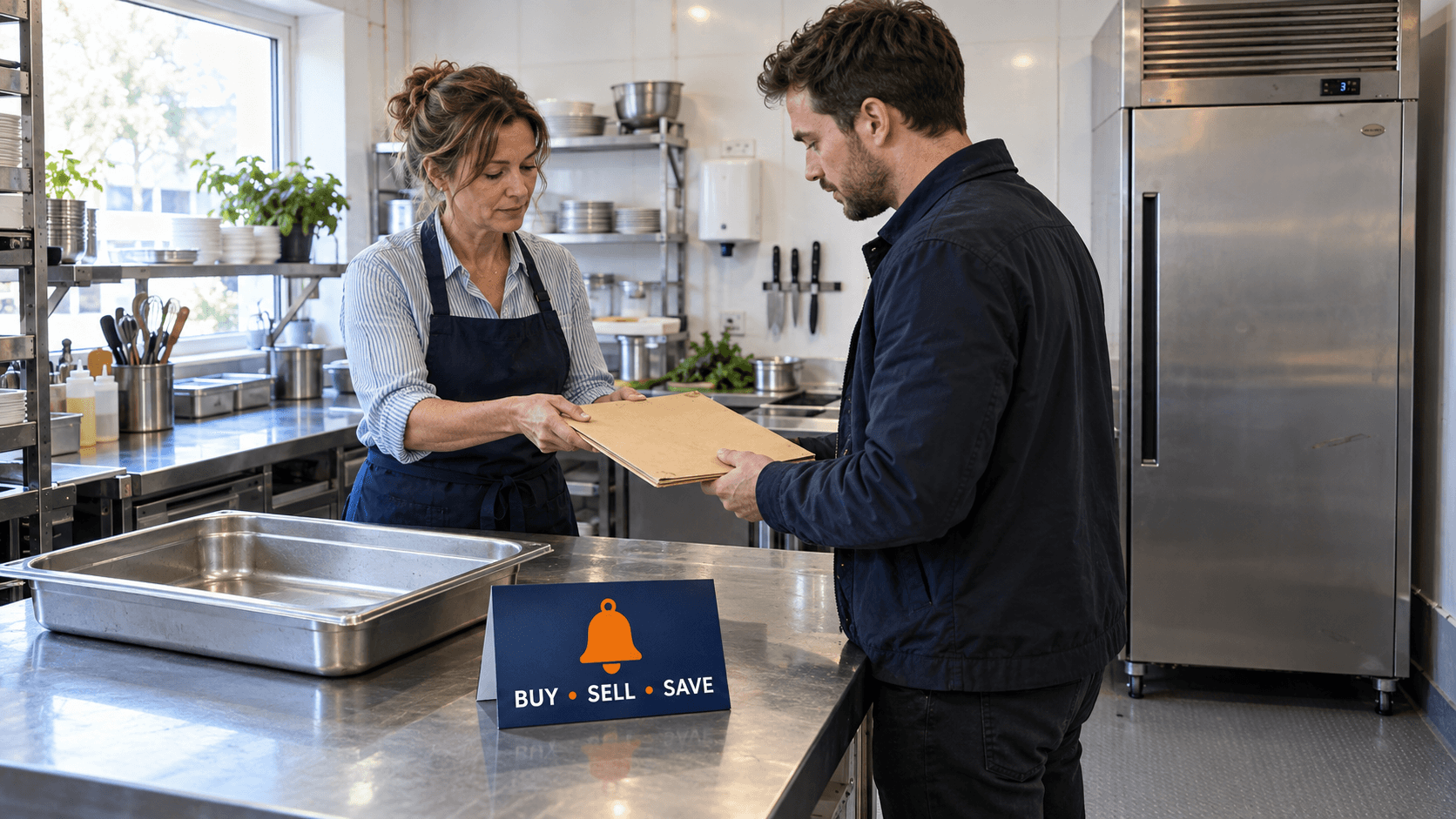
A closing café selling everything out of storage is a kit sale, not a business sale, even with a trading history behind it. List it as equipment and buyers actually find it.
Picture this: a buyer emails about "a catering business for sale", agrees a viewing, and drives two hours. They arrive to a stainless bench, a single door fridge and a sandwich toaster. No lease, no customers, no trading history. Just kit, dressed up as more than it is.
Now the other way round: a pizzeria three streets over is closing after nine years, lease and all, and nobody bids on it, because it went up as "used equipment", so no business buyer ever saw it. Both sellers priced fairly. Both got the wrong audience, because neither worked out first what they were actually selling.
What Makes It a Business Sale
A business sale means a buyer is taking over something that trades, not just something that cooks. That only holds if there is a lease or a licence to hand over, a trading history to show, and some goodwill attached to the name or the pitch.
Each of those gets checked before anyone commits:
- The lease. A buyer will ask to see it, and ask whether the landlord will actually consent to an assignment. A verbal promise from a landlord is not a lease.
- Premises and licences. A premises licence stays with the premises and can usually be transferred to a new holder by application. Street trading consent and personal licences normally cannot, so a buyer may have to apply fresh.
- Trading history. Bank statements, till reports, supplier accounts. Something that shows the business actually turned over money, consistently, not just once.
- Goodwill. The regulars, the reviews, the reputation on the high street. Real, but only worth something if the buyer can keep trading under it, which usually means the name and any social accounts are formally assigned.
Our own guide on buying a catering business goes through what a buyer will actually ask to see for each of those, lease, licences, hygiene rating and forward bookings included.
What Makes It a Kit Sale
A kit sale is everything else. No lease changes hands, no licence transfers, no buyer is taking over a trading history. What is for sale is the equipment itself: the fryer, the fridge, the prep benches, the till.
This covers a full kitchen clearance from a closed site just as much as it covers one fridge going because a kitchen upgraded. The site might have traded for twenty years. None of that matters to the sale, because the buyer is not getting the site, the lease or the customers. They are getting a combi oven, a stack of stainless and a fair price on all of it.
Listing that kind of sale as a "business" helps nobody. A business buyer clicks through expecting a lease and a customer base, finds neither, and leaves. List it as equipment instead, and the trade who actually want a combi oven or a used fridge can find it. Our guide on closing down and selling the equipment properly covers the practical side: what sells, safe disconnection, and timing it against the lease.
The Middle Case: A Closing Café Selling Everything From Storage
This is the one that trips people up. A café closes, the kit gets pulled out before the lease ends, and it sits in a lock-up or a hire unit for a few weeks while the owner works out what to do with it. Then it goes up for sale, still described as "the café equipment" or worse, "the café business."
It is not a business sale. There is no lease attached to a storage unit, no licence, no pitch, no trading history that transfers with a pallet of fryers in a self-storage cage. It feels like a business because it was one, recently, and because it is being sold as one lot. But a buyer taking that kit is not taking over anything that trades. They are buying equipment that used to belong to a business that traded somewhere else.
List it as equipment, priced and described piece by piece where you can, exactly as you would for any other closure. The story behind it, a café that ran for years and is now closing, is a good line in the description. It is not a reason to list it as a business.
Why Real Numbers Matter
A business listing that states a turnover figure only helps if that figure is real and can be shown. A buyer who spots a number that does not add up, against the size of the unit or the hours it kept, does not just doubt that one figure. They assume the rest of the listing is made up too, and move on.
The same goes the other way. A kit sale never needs a turnover figure at all, because none is being sold. Adding one anyway, to dress up a pile of equipment, causes the exact same damage. Honest numbers, or no numbers. Never invented ones.
A Quick Checklist Before You List
- Is there a lease, and will the landlord actually assign it?
- Do any licences or permits transfer, or does the buyer apply fresh?
- Is there real trading history you can show, not just describe?
- Has the kit already left the site and gone into storage?
- Can you back up every figure in the listing if a buyer asks?
- Would a business buyer or an equipment buyer actually want what you are selling?
Get that last one right and the rest of the listing writes itself.
Ready To List It The Right Way?
Selling the business and selling the kit are two different listings, aimed at two different buyers, and mixing them up costs you both. Your first listing is free, one per account, then from £5 for 30 days. No commission and no final value fee. That holds whichever one you are selling.
Take a look at how real listings on either side actually read before you write yours: browse the marketplace.
Ready to Sell Your Equipment?
Your first listing is free, one per account, then from £5 for 30 days. No commission and no final value fee, so what a seller makes is what they keep.
Prepare Your Equipment
- Clean stainless surfaces
- Disconnect safely
- Photograph the data plate
- Box loose parts
- Measure and weigh
- Prepare for pallet collection