

Selling a Catering Trailer in the UK: Paperwork, Valuation and What "Ready to Trade" Actually Means
Selling a catering trailer: gas safety, electrical certification, paperwork checklist, and valuation guide for UK sellers. From CaterBids.uk
Never put the VIN in a public listing. Cloners lift it and put it on a stolen unit. Give it to a serious buyer when they ask, not on the advert.
Why Paperwork Changes the Price of a Catering Trailer
A catering trailer is not just a food business that moves. It is a road vehicle with towing and weight rules attached to it, a gas installation with a safety certificate, an electrical system with its own inspection schedule, and water and waste systems that fall under food hygiene law. Leave any of those incomplete and you are not selling a ready-to-trade business. You are selling a project.
The difference is thousands of pounds. A trailer with full Gas Safe certification, a current electrical inspection certificate, clear weight documentation and a food hygiene registration is worth 30 to 50 percent more than the same trailer with missing paperwork. The buyer knows they can hitch it up and open for service. The buyer without paperwork knows they are facing a weeks-long chase to get a gas engineer, an electrician, and the local authority's sign-off before they can make their first sale.
This is why paperwork is the single most costly gap on a used catering trailer. Not rust, not dents. Paperwork.
The Paperwork You Need Before You List
Towing Licence and Weight Documentation
A catering trailer sits on a chassis with an unladen weight printed on its documents. Buyers need that weight because their towing vehicle has a legal maximum load.
The licence rules changed on 16 December 2021. Anyone with a standard car licence (category B) in England, Scotland or Wales now automatically has BE entitlement and can tow a trailer up to 3,500kg, with a combined weight up to 7,000kg. There is no separate towing test any more. Northern Ireland is different: drivers who passed after 1 January 1997 there still need to pass the B+E test.
That does not mean any car can tow any trailer. Licence entitlement is one limit and the towing vehicle's own capacity is another, and the lower of the two always wins. A buyer with a small hatchback cannot legally tow a 2,500kg trailer no matter what their licence says.
Get the unladen weight and the gross train weight from your V5C or the manufacturer and put both on the listing. State it clearly: "Unladen weight 1,400kg. Gross weight 2,000kg loaded." That tells a buyer in one line whether their vehicle can take it.
Gas Safe Certification
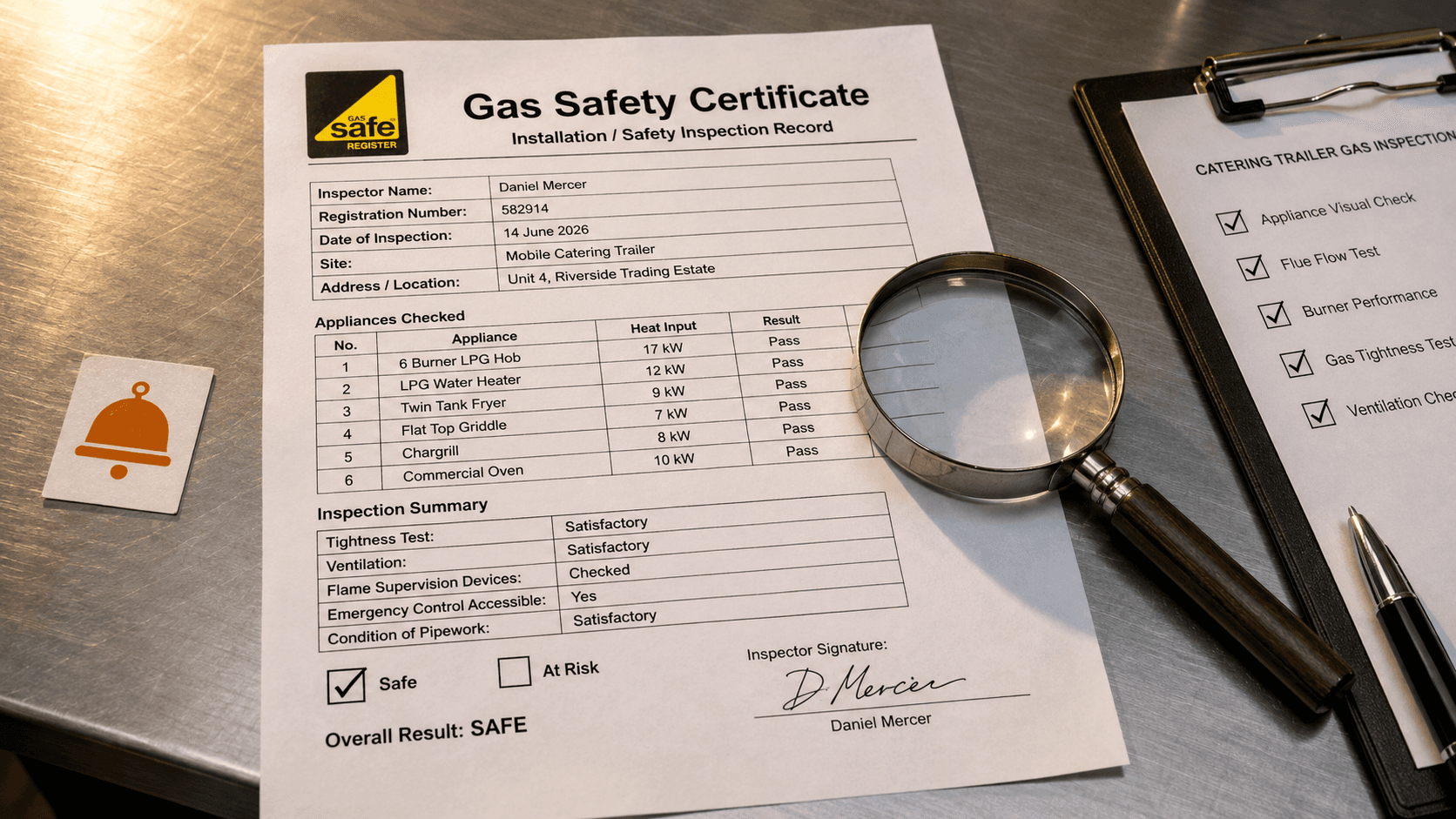
A catering trailer with cooking equipment is a gas installation. It must be checked by a Gas Safe registered engineer who holds the mobile catering competence, which is a separate qualification from domestic work. Not every Gas Safe engineer can sign off a trailer, so ask before you book.
There is no single legal expiry date on a mobile unit the way there is for a rented property, but in practice a certificate less than 12 months old is what event organisers, local authorities and insurers will all ask to see. Anything older and a buyer assumes it has never been checked, and they will not take delivery without paying for their own inspection. That call-out runs £300 to £600 and the engineer may find defects that need fixing before it passes.
The certificate must name the specific appliances and state the gas type. LPG and natural gas are not the same system. A burner jetted for propane will not run safely on natural gas. Make sure your certificate says which one your system uses.
If your trailer has no current certificate, get one before you list. Budget £400 to £800 including the visit.
Electrical Certification
A catering trailer has an electrical system, whether that is a single 16-amp hook-up or a full three-phase installation. Either way it should be inspected by a qualified electrician who issues an Electrical Installation Condition Report (EICR) or an Electrical Installation Certificate (EIC).
The report states the date, the circuits checked, any faults found, and whether the installation is safe to use. Without it a buyer assumes the electrics have never been looked at, and they will pay for their own inspection before taking it on. That costs £200 to £400 and may turn up faults.
Ring a local electrician, tell them it is a mobile catering unit with cooking equipment, and ask for an EICR. They will check the circuits, the earthing, the RCD protection and the connections. Budget £250 to £400, and allow for repairs if anything fails.
Water Capacity and Hygiene Requirements
A catering trailer needs clean running water for hand washing and washing up, and a waste tank to hold the dirty water until it can be emptied properly. Both capacities matter to a buyer.
Check your fresh water tank capacity and your waste tank capacity, and state both. A buyer needs to know whether they can run a full day's service without refilling or emptying. A 50-litre tank limits you to a short shift. A 200-litre tank gets you through a full trading day.
Waste water cannot be tipped down a drain or onto the ground. It has to go to a proper disposal point, and some local authorities have their own rules on where and how often. A buyer planning pitches needs the tank figures to work out their disposal runs.
State it plainly on the listing: "200 litre fresh water, 150 litre waste."
Food Hygiene Registration
A catering trailer selling food must be registered with a local authority as a food business, and that registration is free. After inspection, the authority issues a food hygiene rating from 0 to 5, published on the Food Standards Agency website.
Here is the part sellers get wrong. The rating does not transfer with the trailer. When a food business changes hands, the new operator has to register in their own name, and the business shows as awaiting inspection until an environmental health officer visits. Your 5 rating is yours, not the trailer's.
So do not advertise the rating as though the buyer inherits it. What you can honestly say is that the unit has been inspected and passed, which tells a buyer the layout, the hand wash facilities and the surfaces meet the standard. That is worth something. Registration for the new owner takes one to two weeks.
VIN and Chassis Documentation
Every trailer has a Vehicle Identification Number stamped on the chassis. You will need it to complete the sale.
Do not put the full VIN in a public listing. The risk is cloning: someone photographs the number from your advert and puts it on a stolen trailer of the same type, which then has paperwork that checks out. It happens with plant and horseboxes constantly and catering trailers are no different.
On the listing, say: "V5C and full service history available on request." That tells a serious buyer the paperwork exists without publishing the number to everyone who scrolls past.
Have the V5C ready to show in person. The buyer will want to confirm you own it and that there is no outstanding finance.
What "Ready to Trade" Actually Means
When you list a trailer as ready to trade, you are telling a buyer they can hitch it up, get it to a pitch, connect the utilities and start serving. Ready to trade means:
- Mechanically sound and safe to tow, with working lights and brakes
- Gas appliances certified by a Gas Safe engineer with mobile catering competence
- Electrical installation certified by a qualified electrician
- Water and waste systems clean and functional
- All documentation available: V5C, gas certificate, electrical certificate, manuals
- Any damage disclosed and not affecting operation
A buyer pays top money for that because they are not buying a project. They are buying something they can open with next weekend.
How the Paperwork Affects the Price
A two-year-old 5.5 metre bespoke trailer with a full kitchen fit-out, good condition and current certificates might sit at £28,000 to £32,000. The same trailer with no gas certificate, no electrical certificate and the V5C in a drawer somewhere sells at £15,000 to £18,000. The buyer is pricing in weeks of chasing engineers and the real risk that something fails inspection.
That gap is the paperwork. If yours is complete, say so prominently. If it is not, be straight about what is missing and what the buyer will need to do. A buyer who knows what they are taking on will still make an offer. A buyer who finds out afterwards will not come back, and in this trade people talk.
The Seller's Checklist: Before You List a Catering Trailer
- V5C registration document to hand, not posted publicly
- Unladen weight and gross weight stated on the listing
- Current Gas Safe certificate with the engineer's registration number and date
- Current EIC or EICR from a qualified electrician
- Fresh water and waste tank capacities documented
- Honest note on food hygiene registration status
- Photographs of the full exterior, the interior, and any damage
- Service history and maintenance records if you have them
- Manuals for the gas appliances and electrical system
- Any known defects written down plainly
Ready to Sell Your Catering Trailer?
See what similar trailers are listed at on CaterBids before you set your price.
When you are ready, post your trailer. Photos, your certificates, your price. Your first listing is free while our launch offer lasts, then from £5 for 30 days. No commission and no final value fee, so what you sell for is what you keep.
For more on where to sell, read our guide on selling used catering equipment, and if you want the numbers, our breakdown of selling fees.
If you are selling because you are buying, our guide to buying a used catering trailer shows you what a buyer looks for, which helps you prepare your own.
Buy, sell, save. At CaterBids.uk.
Ready to Sell Your Equipment?
Your first listing is free while our launch offer lasts, then from £5 for 30 days. No commission and no final value fee, so what a seller makes is what they keep.
Prepare Your Equipment
- Clean stainless surfaces
- Disconnect safely
- Photograph the data plate
- Box loose parts
- Measure and weigh
- Prepare for pallet collection