

What a £10,000 Catering Van Budget Really Buys You
What a £10,000 catering van budget buys today: real asking prices for trailers, horseboxes and kiosks, the towing check and the costs to keep money back for.
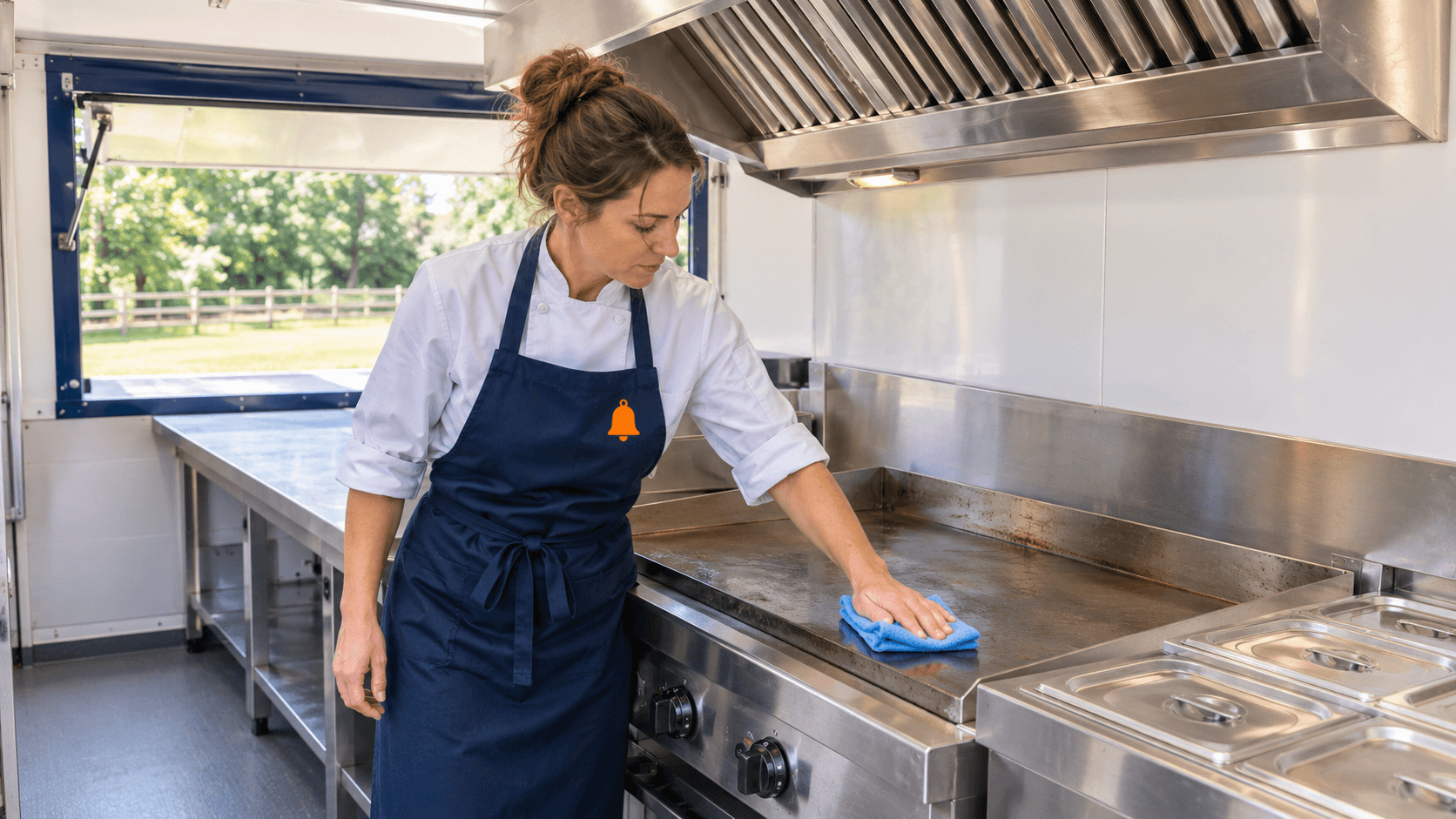
Check your licence before you look at trailers. Ask the seller for the trailer's MAM, then compare it with what your driving licence lets you tow.
Quick answer: On CaterBids right now, ten thousand pounds buys a towable trailer, a converted horsebox, a kiosk or a container unit, not a motorised van: the vans listed start at £23,000. Before you spend it, check you can legally tow what you buy, and keep money back for the gas check, insurance and a street trading licence. Register your food business with your council at least 28 days before your first day of trading.
What this budget buys on CaterBids right now
We looked at every live listing in catering vans and trailers at the time of writing. Here is what sat between £8,000 and £11,250, and where the motorised vans started. Listings change daily, so treat this as a snapshot, not a price guide.
| What it is | Asking prices we saw | How to spot a good one | Who it suits |
|---|---|---|---|
| Converted horsebox | £8,000 and £10,250 + VAT | Dry, solid floor, sound axle and tyres | Events, weddings, coffee and drinks |
| Trailer with a full setup | £9,000 (pizza), £11,000 (brand new) | Kit fitted and working, paperwork in a folder | Street food at markets and festivals |
| Kiosk or container unit | £9,000 (new coffee kiosk), £10,000 (container) | A clear plan for moving it and somewhere to put it | A fixed pitch, site or yard |
| Battery powered unit | £11,250 | Batteries and inverter sized for what you plan to run | Pitches where generator noise is a problem |
| Motorised van | From £23,000 | None listed at this budget | Traders who need to drive, not tow |
The battery powered catering unit shows what sits just over the line. The honest answer is that this money is a towing budget, not a driving one. If you need something you drive, plan for more.
Check you can tow it before you buy
A trailer still needs something to pull it. If you passed your car test on or after 1 January 1997, you can tow a trailer up to 3,500kg MAM (maximum authorised mass). If you passed before then, you can usually drive a vehicle and trailer with a combined weight up to 8,250kg MAM.
Find the MAM for both your car and the trailer in the owner's manual or on the vehicle plates. Then check your car's own towing limit: a heavy unit behind a small car will not work. Ask the seller for the trailer's weight as it trades, because water, gas and stock all add to it.
For a kiosk or container, the question is moving it, not towing it. Ask how it got to where it is now, and sort out the move before you agree a deal.
Money to keep back
The asking price is not the whole bill. Keep part of your budget back for these.
- The gas check. Use a Gas Safe engineer whose ID card shows they can work on mobile catering LPG and on the type of appliance fitted. The back of the card lists what they are qualified for.
- Insurance. Get a quote for the exact unit before you pay. Tell the insurer what it is and how you will trade from it.
- A street trading licence. In England and Wales you may need one from the council where you want to trade. Councils can charge a fee, limit your days and times, or keep a waiting list, and trading without a licence you need can mean a fine of up to £1,000.
- Food business registration. It is free. Register with the council where the unit is normally kept overnight, at least 28 days before you start.
- A tow vehicle, or the move. If the car you own cannot pull it, that is the biggest extra cost of all.
Check the unit, not just the price
At this end of the market, the gap between a good unit and a tired one is mostly in the parts you cannot see in photos. Work through these in order.
- Gas. Cylinders should sit in a ventilated compartment on the outside of the unit. Treat empty cylinders as dangerous too, because they still hold LPG vapour. Ask for the latest gas safety record.
- Running gear. On a trailer or horsebox, look at the tyres, axle, brakes and hitch. Rust, or soft timber in the floor, is a bigger job than any appliance.
- Power. Ask what runs at once on the generator, batteries or hook-up. A fridge needs far less power than a fryer. A commercial coffee machine usually needs less than a fryer too, but it's still one of the biggest loads on a generator or hook-up.
- Kit. Look for commercial appliances, with manuals where the seller has them. See everything working before you pay.
- Paperwork. Receipts for the build, the gas record and any electrical certificate. If there is no folder, slow down.
Our guide to buying a used catering trailer goes further on towed units. If you stretch to a van you drive, the used van buying guide covers the vehicle checks.
Building your own instead
If none of the ready-made units suit you, another route is a plain trailer or kiosk plus your own kit. You can browse used catering equipment from sellers across the UK, then have the gas and electrics fitted and signed off by qualified engineers. Plan the layout and the weight before you buy anything heavy.
Selling a unit at this price
Put the type, the year, the main kit and the power setup in your title. List the trailer's MAM and its empty weight, so buyers can check their licence straight away. Photograph the gas record and the receipts for the build.
Your first listing is free while our launch offer lasts, then from £5 for 30 days. No commission and no final value fee.
Sources
- GOV.UK: Towing with a car
- GOV.UK: Food business registration
- GOV.UK: Street trading licence
- Cheshire East Council: Registration of a food business
- Adur and Worthing Councils: Mobile catering and market stalls
- NCASS: How to check a gas engineer is qualified to work on LPG installations
- CaterBids: Catering vans and trailers listings
Ready to Sell Your Equipment?
Your first listing is free while our launch offer lasts, then from £5 for 30 days. No commission and no final value fee, so what a seller makes is what they keep.
Prepare Your Equipment
- Clean stainless surfaces
- Disconnect safely
- Photograph the data plate
- Box loose parts
- Measure and weigh
- Prepare for pallet collection