

Commercial Kitchen Extraction Canopy: What to Check Before You Buy One Used
Buying a used commercial kitchen extraction canopy: sizing, overhang, baffle filters, gas interlock and what a stripped out canopy is worth. CaterBids.uk
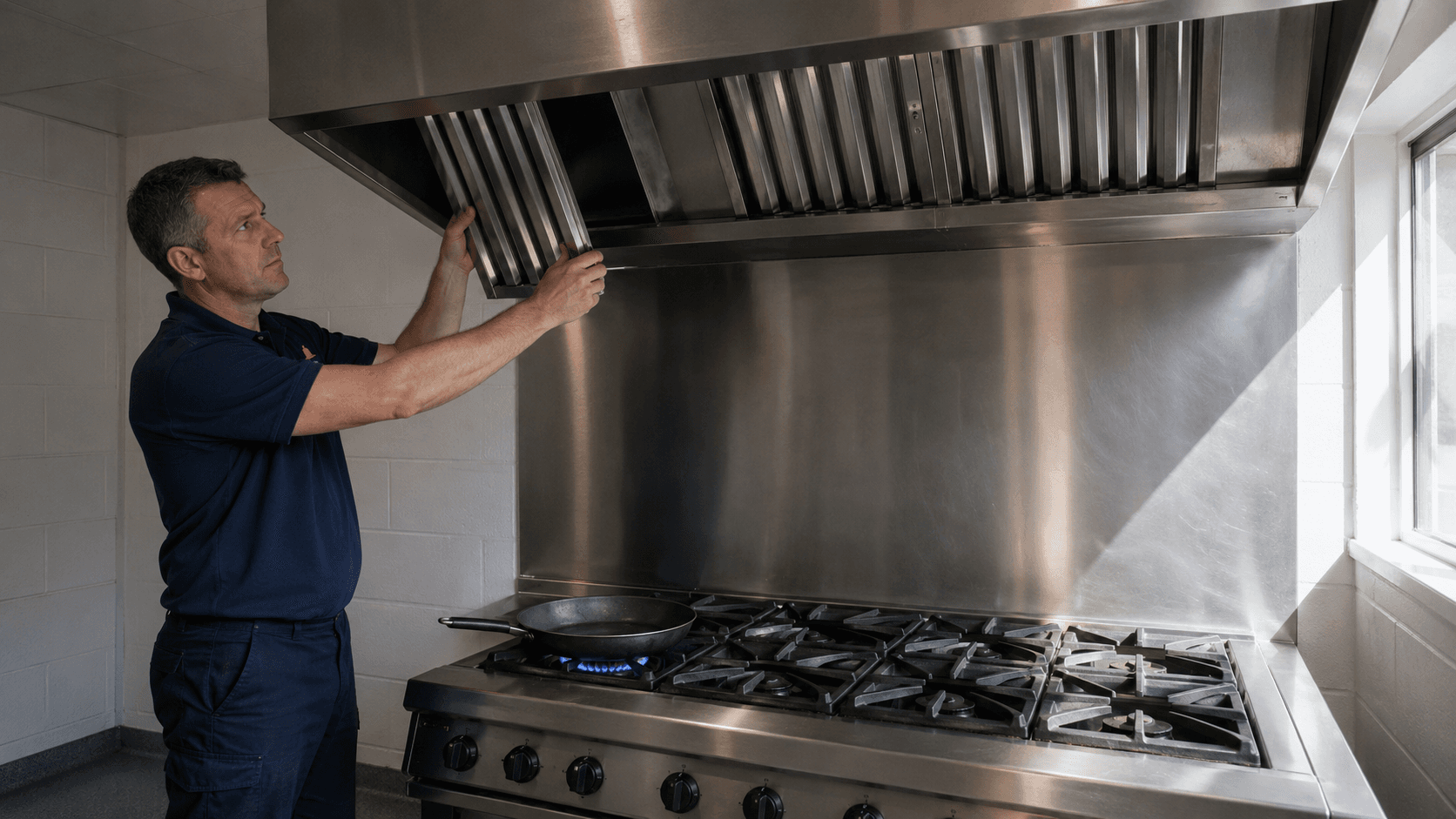
A commercial kitchen extraction canopy is the one piece of kit nobody thinks about until an environmental health officer looks up, or a gas engineer refuses to sign off the range underneath it. It is also the piece most often cut out with a grinder and skipped when a site closes, because it looks like an awkward stainless box that nobody would want.
Plenty of people do want it. New canopies are made to order and they carry a lead time. A used one that genuinely fits the room is worth real money. A used one that is 300mm too short for the appliance line under it is worth scrap value, and no amount of good photography changes that. Almost everything about buying and selling canopies comes down to that difference.
Size Is the Whole Decision
A canopy is not a generic box. It is sized to the appliances it sits over, and if the sizing is wrong nothing else about it matters.
- It has to overhang the kit. The guidance most installers work to, BESA's DW/172 specification for kitchen ventilation systems, is that the canopy extends at least 300mm past the front of the cooking equipment. Rising heat and grease laden vapour do not travel straight up, so a canopy that stops flush with the front of the range never captures a good share of it.
- Measure the appliance line, not the old canopy. Total width of the run you are covering, depth of the deepest appliance, and floor to underside height in the room it is going into. Those three numbers decide whether a listing is worth opening.
- Wall or island changes everything. A wall mounted canopy has a wall behind it. An island canopy is open on all four sides, moves more air and usually carries filters on two faces. They are not interchangeable, and a cheap island canopy stuck against a wall is a poor buy.
- Check the ceiling height first. Canopies are usually hung with the underside around 2.0 to 2.1 metres so people can work under them without ducking. A deep canopy in a low ceilinged room leaves you nowhere to put it.
What to Check on the Canopy Itself
Once the size works, the condition check is quick and physical.
- Grade and thickness of the steel. It should be 304 stainless and it should feel fabricated rather than folded from foil. The same grade rules that apply to prep benches apply here, and a canopy spends its whole life in hot grease and cleaning chemicals.
- Baffle filters, not mesh. Stainless baffles, sat at roughly 45 to 60 degrees, are what a commercial canopy should have. They force the air to change direction so the grease drops out, and they do not carry flame the way a mesh panel does. If it comes with flat mesh, price in a full set of baffles.
- Grease gutter and drain plug. Look along the bottom of the filter housing for the collection channel and the removable pot or plug. Crushed gutter or missing plug means it drips onto the range.
- Filter runners. Filters lift out for washing every week or two. Bent runners mean filters that never seat, which means grease straight into the duct.
- Lights and wiring. Canopy lights should be sealed and IP rated. Assume anything that has been ripped out needs testing before it goes back into service, and price that in rather than argue about it at collection.
- Signs of a fire. Heat bloom, scorched paint above the filter line, or a discharged suppression head. Walk away.
The Parts That Are Not the Canopy
This is where used canopy budgets get eaten, and it is worth being honest about it before you buy rather than after.
The canopy is the cheap end of the system. The fan, the ductwork, the make up air and the commissioning are the expensive end, and none of it comes off the wall in one piece with the canopy. Ask whether the fan is included, whether it is single or three phase, and get the model off the plate.
If there is gas cooking underneath, the system needs a gas interlock, so the gas supply is isolated when the ventilation is not running. That is what BS 6173 is driving at, and it gets tested at commissioning and at least once a year afterwards. A second hand canopy does not arrive with a compliant system attached to it. Keep it in the same file as the rest of your gas safety obligations on used kit.
Selling a Canopy You Are Stripping Out
If you are clearing a site, the canopy is the item most likely to be treated as scrap when it is not.
Take it down in one piece if the access allows. Photograph it end on, underside up with the filters out, and flat against a wall so the run reads. Then give the buyer the three numbers that decide it for them: overall length, depth front to back, and height of the canopy body. Say what fan and ductwork are included, and say plainly if none of it is. If you photograph the data plate on the fan, CaterBot reads it and fills the specs in for you, so you are not typing a listing out on a phone in an empty kitchen.
The Checklist
- Overall length, depth and body height measured in millimetres
- Wall mounted or island, stated clearly
- Appliance line it was fitted over, and its total width
- Filter type and how many, baffle or mesh, plus any missing
- Grease gutter and drain plug present and sound
- Lights present, and stated as untested if they are
- Fan and ductwork listed as included or not included
- Photographed underside up with the filters removed
A canopy is a large, awkward, made to measure item, and that is exactly why the used ones described properly sell. Measure it, photograph the inside of it, and let the buyer work out in a minute whether it fits. Buy. Sell. Save.
Ready to Move the Extraction You Are Stripping Out?
List it on CaterBids. Zero final value fees, so we take no cut of what it sells for, and you pay to list from £5. Fitting out instead? Browse the marketplace.
Ready to Sell Your Equipment?
Your first listing is free while our launch offer lasts, then from £5 for 30 days. No commission and no final value fee, so what a seller makes is what they keep.
Prepare Your Equipment
- Clean stainless surfaces
- Disconnect safely
- Photograph the data plate
- Box loose parts
- Measure and weigh
- Prepare for pallet collection