

How to Sell Used Bakery Machines: A UK Seller's Guide
Selling used bakery machines in the UK? What a mixer, deck oven or prover is actually worth, the specs buyers ask for, and how to move it. CaterBids.uk
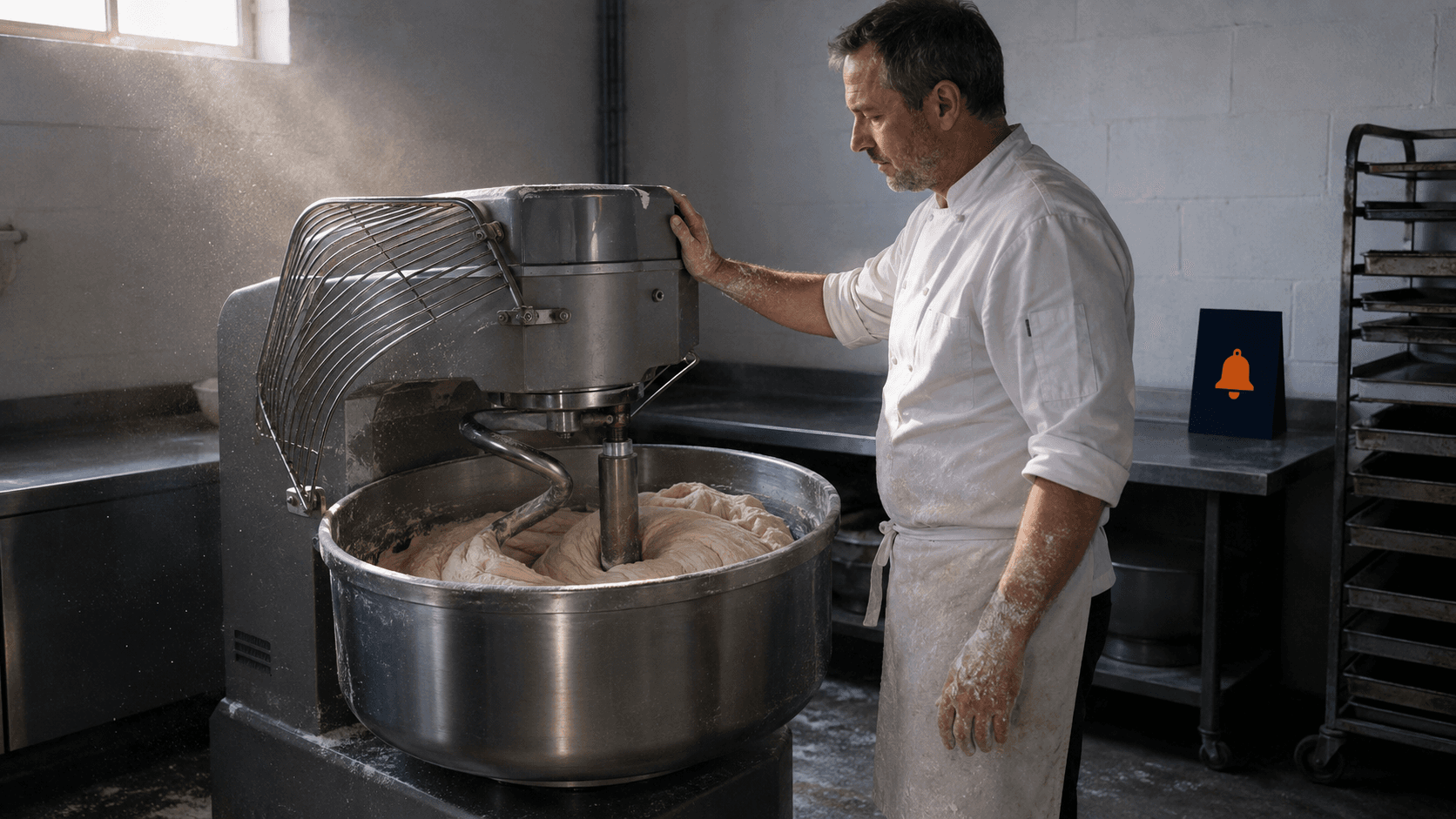
Photograph the mixer running with dough in it, before anything is disconnected. That one photo is worth more to a buyer than any description you can write.
A Bakery Machine Is Worth More Than Its Weight
The scrap man will give you a price for a spiral mixer in about four seconds, and it will be based entirely on what it weighs.
That is almost never what the machine is worth. Bakery equipment is built to run for decades. A well kept mixer or deck oven is still earning long after the bakery that bought it new has changed hands twice, and there is always somebody starting up, expanding or replacing a failed machine who needs exactly what you have standing idle.
The gap between the weight price and the trade price is usually thousands. This is how you keep it.
What Standing Idle Actually Costs You
The value does not disappear all at once. It goes in stages, and none of them cost you anything on the day, which is exactly why nobody notices until the machine has been quiet for months.
Power goes first: the supply gets taken out with the old cook line, or the machine gets isolated and never reconnected. From that point every honest answer you give a buyer is a description instead of a demonstration. Next goes the load test: a mixer running empty proves the motor turns, not that the gearbox is quiet under a full bowl of dough, and that test only exists while there is still flour and water in the building. Then the person who ran it moves on, taking with them the knowledge of where it caught and what it sounded like when it was right. After that the paperwork gets separated: service sheets cleared from a drawer, the manual gone from on top of the machine. Last, the machine itself gets moved into a lock-up, under a sheet, behind the shelving, and now it cannot be photographed or reached without somebody giving up a morning.
None of that is a reason to panic if your machine has already gone quiet. It is a reason to move on the steps below sooner rather than later.
What Your Machine Is Actually Worth
- The parts network sets the value, not the year. A fifteen year old machine from a brand with UK spares and engineers is worth more than a five year old one nobody can get parts for. Buyers who know the trade price it that way, so lead with the brand if it is a good one.
- Condition beats age, and evidence beats claims. Service history moves the price on bakery kit more than the manufacture date does. If you have it, say so in the first line.
- Know which machine you are actually selling. A spiral mixer has two motors, a bowl that turns in both directions and a fixed hook, and it is the machine bread bakers need. A planetary has one motor and a bowl that stays still while the tool orbits, and it is the general purpose machine for cake, pastry and batter. They are not interchangeable and they do not sell to the same buyer. Calling a spiral a "dough mixer" and leaving it there costs you the people searching for the right one.
- Working beats mint. A machine described as working, with proof, sells faster than a machine described as immaculate with no proof.
Photograph It Working. This Is the Whole Job
If you do one thing from this guide, do this one.
A spiral mixer photographed running with dough in it is worth real money more than the same machine photographed clean and still in a corner. A deck oven shot with the door open, steam coming off and loaves on the hearth, tells a buyer everything a paragraph cannot. A prover shot at temperature says more than the word "working". Better still, take a short video rather than a still: phone held steady, sound on, because the sound is half of what a buyer is judging a machine's condition by.
Buyers of used bakery machines are buying reassurance, not metal. Every photograph that removes a doubt removes a reason to haggle.
Do it before anything is disconnected or moved. Once the machine is in a lock-up under a dust sheet, that photograph is gone and so is part of your price. If whoever ran the machine every day is still around, ask them what it does when it is right, and write that down too. That is knowledge a stranger buying the machine has no other way of getting, and it leaves the building the day they do.
Do Not Clean It Up. Prove It Instead
The instinct, once you finally look at the machine properly, is to smarten it up: degrease the seams, polish the bowl, put a coat of paint on the frame.
Resist it. Cleaning changes how the machine looks and nothing a buyer can actually verify, and it invites the one question you do not want, which is what did you do to it and why did it need doing. It is worth knowing that refurbished has no legal definition in the UK either, so a tidied machine described with that word is making a claim nobody has to stand behind. Experienced buyers know this. They discount a shiny machine with no history faster than they discount a scruffy one with a folder of paperwork.
The Numbers a Buyer Asks For First
Put these in the listing and you will get fewer time wasters and more serious enquiries:
- Mixers: dough capacity in kilos for a spiral, bowl volume for a planetary. Not both, and not guessed.
- Deck ovens: number of decks, internal dimensions of each, whether it has steam injection and whether the steam works.
- Rack ovens: trolley size and tray size, because they are not universal and a buyer with the wrong trolleys will walk.
- Provers: tray capacity and whether it holds humidity as well as temperature.
- Everything: three phase or single phase, and the kW. This is the first question every real buyer asks, and answering it up front saves you both a wasted trip.
Upload your photos and CaterBot writes the listing for you, which matters when you are shifting a whole bakery rather than one machine.
Getting It Out of the Building
Bakery machines are dense, and this is where sales fall apart on collection day.
A spiral mixer that looks like a two man lift is often well over 200kg. A deck oven usually comes apart into separate decks, each needing proper handling, and putting it back together is a job in itself. Before you agree a price, be honest with the buyer about the route out: stairs, a step, a narrow doorway, whether there is anywhere for a vehicle to get close.
Then palletise it properly. Upright on a wooden pallet, wrapped in clear heavy duty stretch film so the machine and the pallet move as one object, cardboard corner boards under the film on the edges. Drain and dry anything water fed before it travels. Kit that turns up damaged turns into a refund conversation, and a refund conversation costs you more than the wrap did.
Where to List It
Sell it piece by piece rather than as one lot. A clearance price for everything is built to cover somebody else's risk and margin, and the machines they do not want get weighed in.
Listed individually, the mixer finds the bread baker, the prover finds the start up, and the deck oven finds the site that has been waiting for one to come up. Our guide on where to sell used catering equipment compares the options, and if you are buying as well as selling, the used bakery equipment guide covers what to check from the other side of the deal.
The Seller's Checklist
- Photograph or film every machine working, before anything is disconnected
- Write down the capacity numbers, in kilos, litres or tray count as appropriate
- State three phase or single phase, and the kW
- Find the service history if you have it, and ask whoever ran it what it does when it is right
- Bag the service sheets, the manual and any special tools, and keep them with the machine
- Note what goes with it, bowls, hooks, spirals, trays or trolleys, and whether they are the originals
- Name the brand in the title if the parts network is good
- Be straight about the route out of the building
- Pallet and shrink wrap before collection, never after
Sell It Properly and It Sells Itself
Bakery kit has a queue of buyers waiting for it. They just need to be able to see it working, know what it takes, and trust it will arrive in one piece. Do those three things and the machine does the rest: BUY • SELL • SAVE, with the saving landing on your side of the deal for once.
Ready to List?
Not sure whether yours is ready to go? Our free sell check tells you what a buyer will find missing before they find it.
List your bakery machines on CaterBids and keep 100% of every sale. Your first listing is free while our launch offer lasts, then from £5 for 30 days. No commission and no final value fee. If you are replacing rather than clearing, the marketplace is where the trade is selling.
Ready to Sell Your Equipment?
Your first listing is free while our launch offer lasts, then from £5 for 30 days. No commission and no final value fee, so what a seller makes is what they keep.
Prepare Your Equipment
- Clean stainless surfaces
- Disconnect safely
- Photograph the data plate
- Box loose parts
- Measure and weigh
- Prepare for pallet collection