

Gas and electrics on a used catering trailer: what to ask the seller
Buying a used catering trailer? The gas and electrical questions to ask the seller, the paperwork to see and the checks to make before you hand over any money.
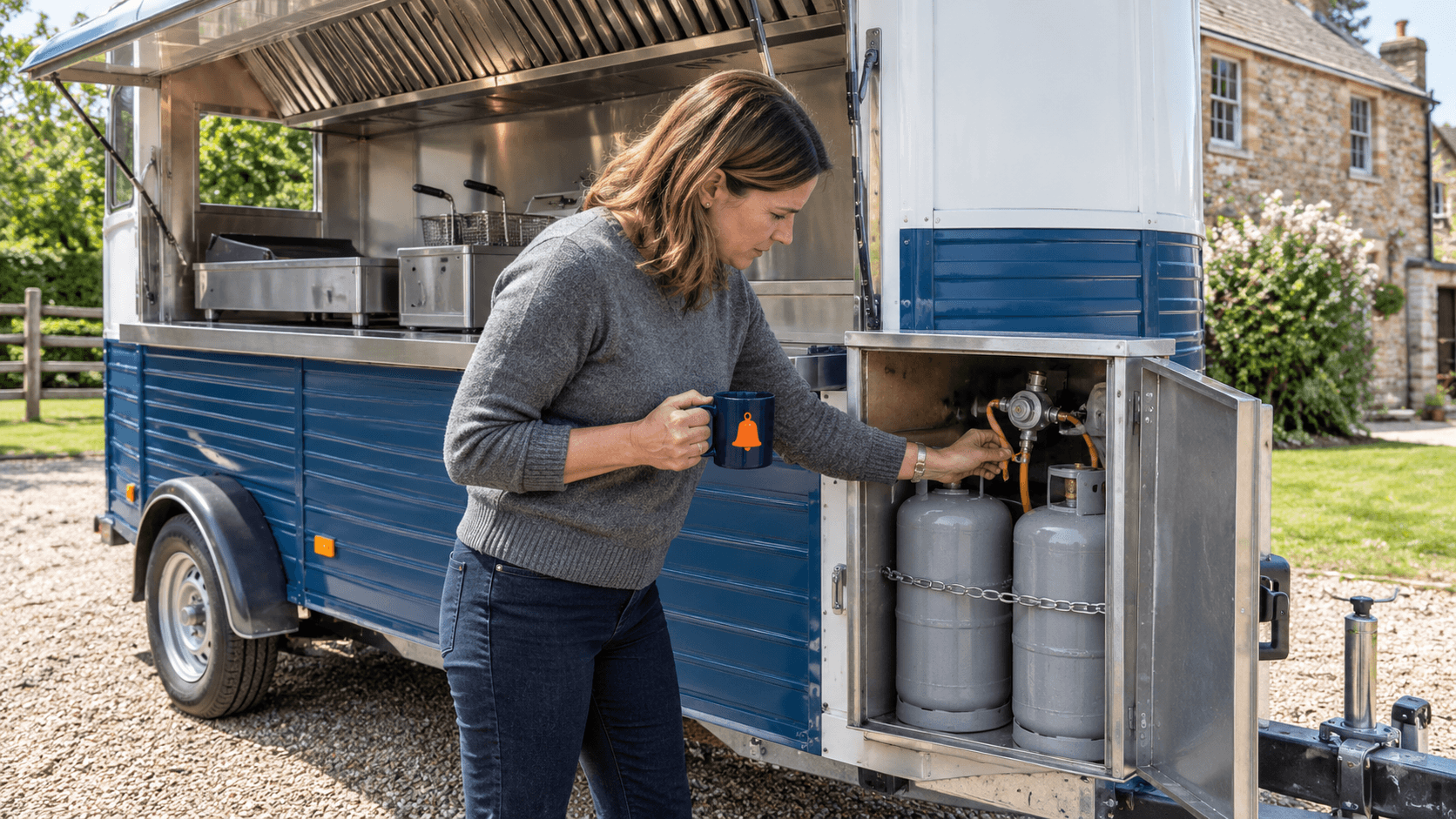
Ask the seller to fill the fryers, then light every burner and switch on every electric item at once. Leave it all running for 20 minutes while you stay with it. Faults show up under full load.
Quick answer: Before you pay for a used catering trailer, ask for a current gas certificate from an engineer qualified for LPG mobile catering, and a current electrical certificate from a competent electrician. Ask what every appliance runs on, where the cylinders are kept and how the unit is powered on site. If the owner cannot answer or show the paperwork, price in new checks or walk away.
Ask for the paperwork first
Two documents matter most: the gas certificate and the electrical one. Do not buy a unit without valid gas and electrical safety certificates.
Ask for the originals or clear copies. Check the dates, the name of the firm that did the work, and that the appliances listed match what is fitted now.
A certificate that names a different griddle does not cover the one in front of you. If kit has been swapped since the last check, treat it as unchecked.
Questions to ask about the gas
Most trailers cook on LPG from cylinders. These questions tell you quickly whether the setup has been looked after.
| Ask | A good answer | If not |
|---|---|---|
| Who signed off the gas, and when? | A named engineer on the Gas Safe Register, with LPG and catering on their card | Budget for a new check before you trade |
| Does every burner have a flame failure device? | Yes, on every appliance | Unsafe to use until fixed or replaced |
| Is any appliance a domestic model? | No, all commercial kit | Domestic kit should not be in a trading unit |
| Where are the cylinders kept? | In a separate locker, outside the cooking area | Ask how it was ever signed off |
| Is the locker shielded from the kitchen? | A fire-resistant body or a heat barrier | Get an engineer's view before you buy |
| When were hoses and clips last changed? | A date, ideally with a receipt | Plan to replace them |
| What do you check before each use? | A clear daily routine | You will need to learn one anyway |
All commercial catering LPG equipment must have a device that shuts off the gas if the flame goes out. Cylinders should never be stored inside the trading structure itself.
The trailer body should give at least 30 minutes of fire resistance, or have a heat-resistant barrier between the unit and the LPG storage cupboard. Ask the owner which one applies.
Unsuitable hoses, the wrong hose clips and missing safety devices are common faults. Look at the hose for cracks, and at each clip for a proper fitting.
Check the engineer, not just the certificate
A certificate is only as good as the person who signed it. Some engineers hold LPG qualifications but not catering ones, and out-of-scope work like that produces certificates that should never have been issued.
Ask for the engineer's name or licence number, then look them up on the register. The front of their ID card shows a photo, start and expiry dates, a licence number and a hologram.
The back lists what they are qualified to work on and whether it is current. For a trailer you want LPG and mobile catering on it, and the engineer needs the qualification for each appliance within the LPG mobile catering ticket.
For more on what a sound gas setup looks like, see our guide to second-hand gas equipment safety.
Questions to ask about the electrics
- What runs on electric? Fridges, lights, water pump, hot cupboard, any electric fryer. Add it up so you know what supply you need, and read our guide to single-phase and 3-phase kit if the answer includes big cooking equipment.
- How is it powered on site? Hook-up, generator or battery. Ask to see it working on the supply you plan to use.
- Who wired it? Ask for an Electrical Installation Condition Report (EICR) from a qualified electrician, the date it was done, and whether every socket circuit has RCD protection.
- Are the plug-in appliances checked? Portable appliance testing is not a legal requirement in itself, but equipment must be kept safe, and visual checks are an essential part of that.
- Has anything been added since the last inspection? Extra sockets and extension leads are a warning sign.
Check it yourself on the day
Turn up early and ask for the unit to be cold, so you see it start from scratch. Then ask the owner to fill the fryers, light every burner and switch on every electric item at once.
Leave it all running and stay with it while you look round. If the trip switches drop or a burner goes out, ask why before you go any further.
Look at the hook-up lead for cuts, taped repairs or a damaged plug. Smell round the gas locker and hoses with everything off.
Never alter gas pipework yourself, and never let the owner do it on the day. Only a registered engineer should touch it.
If the paperwork is missing
Missing papers do not always mean a bad unit, but they shift the cost to you. Get a price for a gas check and an electrical inspection, and allow for any repairs those turn up.
You can make the deal subject to both passing, or offer less to cover them. What you should not do is tow it home and start trading without them.
Browse used catering trailers for sale, or search all used catering equipment across the UK.
Selling? Have the answers ready
Book both checks before you advertise and put the dates in your listing. Buyers who see current paperwork ask fewer questions and haggle less.
Our guide to selling a trailer covers photos and pricing. Your first listing is free while our launch offer lasts, then from £5 for 30 days. No commission and no final value fee.
Sources
Ready to Sell Your Equipment?
Your first listing is free while our launch offer lasts, then from £5 for 30 days. No commission and no final value fee, so what a seller makes is what they keep.
Prepare Your Equipment
- Clean stainless surfaces
- Disconnect safely
- Photograph the data plate
- Box loose parts
- Measure and weigh
- Prepare for pallet collection